Llanelli Naturalists Newsletter - No. 74 - July 2008
Phillip Jones
All houses in our ‘close’ have small front gardens with most having a patch of lawn and a flower bed. An increasing number have replaced all vegetation with pebbles, a dismal sight in my view. Our next door neighbours, who have lived in the house since it was built 25 years ago, keep their lawn trim by regular mowing and have never applied weed-killer or fertilizer. This lawn produced two Green-winged Orchids Orchis morio this year, April 2007, for the first time. When the leaves first appeared they were almost dug up as they were mistaken for ‘weeds’. Once identified as wild orchids, great care was taken not to damage them while mowing the lawn and visitors were proudly shown these special flowers. This lawn has several ‘waxcap’ grassland fungi each autumn and must also have the appropriate fungus partner for orchid seed germination and early development.
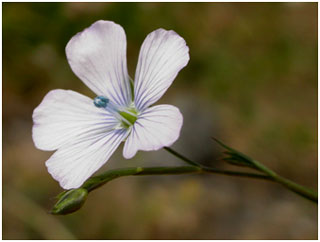 The nearest Green-winged Orchid population is along the coast path where the former coal-fired power-station and railway sidings stood, at least 800m away. This former power-station area has had other nice flowers including Prostrate Toadflax Linaria supina, Pale Flax Linum bienne and Sand Catchfly Silene conica. Some years ago I introduced seeds of the first two species into the gravel path at the front of my house where they do reasonably well. The Toadflax has spread to several other gardens in the ‘close’ and does particularly well in some of the ‘cobbled’ front gardens, much to the dismay of one owner who complains bitterly about ‘these damn pesky yellow things’ because ‘the more I pull out, the more they seem to come’. There is therefore some hope for pebbled plots!
It is just as well that these flowers flourish in our small front gardens as they have all but disappeared from the Millennium Coastal Park due to visual improvement of the power-station site by sowing vigorous grass species and tree planting. So much for biodiversity!
