Llanelli Naturalists Newsletter - October 2002 - No 6
JJ Graham
Carmarthenshire’s First Resident Cryptogamic Botanist
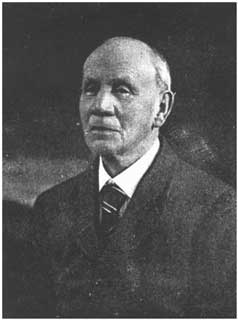 It is little coincidence that with the publication of the first census catalogue of liverworts by the Moss Exchange Club in 1905, Knight was already working on his own checklist of bryophytes for Carmarthenshire culminating in his Manuscript Catalogue of Welsh Bryophytes (published by Wade, 1949). Written in Knight’s own hand and undated, the records and accounts contained in this catalogue date from between 1903 and 1907. On the bases of current nomenclature (Blockeel & Long, 1998), the catalogue lists 103 liverworts and 287 mosses. The vast majority of records are by Knight with many of the Sphagna and a few moss records confirmed by D.A.Jones. The catalogue still stands today as a fine account of the bryophytes of Carmarthenshire and compares favourable with a new flora project for the county (Graham, Motley & Bosanquet, in prep.) which lists (ignoring species splits since Knight’s day) 120 liverworts and 326 mosses.
Following Knight’s death in 1944, W.R.Price wrote of his late friend and fellow member of the Cotswold Naturalist Field Club that Knight ‘probably had a greater knowledge of the plants of Gloucestershire than any man has acquired at any time’. There is little doubt that the same statement could be applied to Knight’s pioneering work in Carmarthenshire. Knight first found many of this county’s plants and he contributed botanical records to numerous other counties throughout the British Isles from excursions as part of natural history societies or with botanical friends. He also participated in botanical excursions to other northern European countries.
Price noted that Knight’s prolific botanical output was thanks to his fairly unlimited leisure time (he retired early in life) and a very methodical nature (after all he had been a maths teacher). A.J Wilmott, in his obituary on Knight in 1944, noted that ‘Knight was one of the old breed of naturalist that become less numerous as specialisation increases’. In some ways this does not do Knight justice. On the evidence of the many herbarium specimens, which survive today, Knight was intimately familiar with a broad range of groups from flowering plants to mosses and lichens. Also, although less well documented, it appears from accounts of those who knew him that he studied a range of other groups including fungi and the microscopic life of ponds. Those who specialise today would do well to reach Knight’s proficiency in any of the groups he knew. Wilmott went on to summarise the encouragement, assistance and happy companionship of Knight in the field, as remembered by friends, writing that ‘it is impossible to overestimate the effect of such a life on the growth of interest in Natural History’.
Henri Herbert Knight was born in Sutton Maddock, Shropshire on 24 May 1862 and he was the only son of Henri John and Elizabeth Francis Knight; Knight’s father being a curate at the time of young Henri’s birth. Little is known of Knight’s early life except that he was educated at Rossall School near Blackpool from 1874 -1881 and that he then obtained an M.A degree at Clare College, Cambridge. At Cambridge, mathematics was his main subject and it is likely that his interest in natural history continued during his time at Cambridge. He gained first class honours in the tripos in mathematics (a wrangler - 7th of his year) and became an elected fellow of Clare College, Cambridge.
 In 1888, Knight joined the teach-ing staff at Llandovery College in Carmarthen-shire, and was described as a shy man but by all accounts fitted into college life well. He played football for the college and was known for his politeness on the playing field always helping up tackled players and questioning them to find out if they had been hurt. He also proved to be a very successful teacher of mathematics instilling the subject into any boy who showed the slightest aptitude. Away from teaching, Knight’s hobby was natural history and it was during this time that he began discovering the flowering plants, ferns, bryophytes and lichens of Carmarthenshire. (Vice-County 44). Also around this time, a number of key works were published in response to an increased popularity in natural history - key works dealing with lower plants, some of which Knight would have been familiar with at that time, including R.Braithwaite’s detailed account of the Sphagnaceae (1888) and the Students Handbook of the British Mosses by H.N.Dixon (1898). In response to the enthusiasm for natural history of both Knight and a student named Littleton Powys, Llandovery College formed a field society and regular excursions took place to learn about the local natural history. These excursions, which took place on Sundays and involved groups of students as well as other lecturers, were mainly in the hills around Llandovery itself but sometimes went further afield to locations such as the South Wales coastline or to Bannau Sir Gaer cliffs above Llyn-y-Fan Fach – a noted arctic alpine site. Powys wrote of his memories of Knight during these excursions saying that ‘he was a born naturalist, he loved the country around Llandovery and knew it well, he knew its flowers, its mosses and one could never have been a more considerate teacher and guide’.
In 1896, the Moss Exchange Club (the precursor of today’s British Bryological Society) was formed and Knight, as a founder member, forged close contacts with leading bryologists of the day. With the formation of the Moss Exchange Club, British bryology entered into a new phase and saw the beginnings of systematic recording. With the publication of the first census catalogue of liverworts by the Moss Exchange Club in 1905, Knight was already working on his own checklist of bryophytes for Carmarthenshire, culminating in his Manuscript Catalogue of Welsh Bryophytes, described above. .
The following bryophytes are confirmed as vc44 records of Knight’s due to voucher specimens in the National Museum of Wales but have not been since his day:
- Acrocarpous moss Andraea alpina (Nant Melyn)
- Acrocarpous moss Dryptodon patens (Ystradffin)
- Leafy liverwort Bazzania tricrenata (By Afon Tywi above Ystradffin)
- Leafy liverwort Marsupella spruceii (Rocks by Llyn y Fan Fach)
- Leafy liverwort Porella cordeana (Llyn y Fan Fach)
Suitable habitat still occurs in the general locality at which Knight recorded these species and there is no reason to suggest that they do not still occur in the county today. It can be difficult to interpret the exact locations from notes on Knight’s herbarium packets. However, the failure to re-find species by recent botanists only places more emphasis on Knight’s abilities as a field botanist.
The following species are likely to have been lost from Knight’s original localities:
- Thalloid liverwort Targionia hydrophylla (Llanstephan Castle) – no other suitable sites in the county.
- Pleurocarpous moss Leucodon sciuroides (tree by Ystradffin Church) – original trees have been removed – now only known from Dinefwr Deer Park and surrounding area, Llandeilo.
- Acrocarpous moss Splachnum ampullaceum (Banc-y-Llyn, nr. Carmel)*
- Acrocarpous moss Splachnum sphaericum (Banc-y-Llyn, nr. Carmel)*
- Acrocarpous moss Dicranella cerviculata (Banc-y-Llyn, nr. Carmel)*
*Banc-y-Llyn, an area of extensive peat bogs in the past has been extensively modified by forestry plantings, though areas of bog remain and are now conserved as part of the Llyn Llech Owain Country Park. D. cerviculata requires open areas of peat and the Splachnum species live on rotted animal dung, a niche which will have been lost due to agricultural change of the land.
The following localized species still occur in Knight’s locations:
- Leafy liverwort Anastrophyllum minutum (moorland west of Llandybie) –refound on ‘moorland’ on western edge of Mynydd Du.
- Leafy liverwort Scapania cuspiduligera (old limestone quarries above Gwynfe) - well known from a small number of old limestone quarries on Mynydd Du).
- Leafy liverwort Lepidozia cupressina (rocks, Dyffryn Ceidrych) – currently known from a single north-facing rock outcrop, Garn Goch, nr. Bethlehem. Knight’s original location would have been slightly further up the valley but certainly in the same general area.
- Acrocarpous moss Coscinodon cribosus (rocks nr. Marros) – still occurs here today.
- Acrocarpous moss Encalypta vulgaris (Pendine) - still occurs on walls in the Pendine area.
- Pleurocarpous moss Calliergon giganteum (Waun Ddu, Myddfai Hills) Recorded today from a handful of sites but one of the best areas to find this species in quantity is still the slightly base-rich flushes of the Myddfai area of common land near the Brecknock border.
- Pleurocarpous moss Drepanocladus polygamus (Pembrey Burrows) The stronghold of this species is still dune slacks at Pembrey.
- Acrocarpous moss Amphidium lapponicum (Llyn y Fan Fach)
- Acrocarpous moss Grimmia torquata (Llyn y Fan Fach)
- Leafy liverwort Scapania subalpina (Llyn y Fan Fach)
- These 3 sub-alpine species still occur here today.
- Batrammia halleriana (rocks by Afon Gwydderig nr. 4-mile stone). This is perhaps one of Knight’s most famous bryological locations. Knight frequently walked up the Afon Gwydderig from Llandovery, often collecting the same species at different times of the year in order to understand the season they fruited. The small colony of B. halleriana has been re-found several times, recently in 2001, and occurs on shaded rocks in woodland beside the river and below the roadside monument - Knight’s exact location.
As well as being a noted bryologist, Knight made a very significant contribution to the recording of flowering plants and ferns in Carmarthenshire with many noteworthy records being attributed to him in R.F.May’s book, A List of the Flowering Plants and Ferns of Carmarthenshire, 1967. Most of these records relate to NE Carmarthenshire – within reach of his base in Llandovery. Some localities were doubtless reached by train – Llangadog for example, whilst other required greater efforts such as his records of lanceolate spleenwort Asplenium obovatum (A.billotii) from Pendine; limestone polypody Gymnocarpium robertianum at Carreg yr Ogof or roseroot Sedum rosea at Llyn y Fan Fach. A selection of his more interesting records (all 1907-1910) are listed below:-
- wood stitchwort Stellaria nemorum ssp. nemorum (‘nr. Llandovery’)
- stone bramble Rubus saxatilis (‘nr. Gwynfe’)
- brown sedge Carex disticha (Pembrey)
- hay-scented buckler-fern Dryopteris aemula (Pumpsaint)
- dwarf chickweed Moenchia erecta (Llandovery and Llangadog)
- small dodder Cuscuta epithymum (‘nr Llandovery’)
- broad-leaved cotton grass Eriophorum latifolium (‘nr. Gwynfe’)
Another interesting record is a joint one, made with T.W.Barker – of sea clover Trifolium squamosum ‘nr Carmarthen’. Barker was the author of the compact, but very useful, Handbook of the Natural History of Carmarthenshire (1905).
In that volume, Barker refers to another of Knight’s outstanding records – that of alpine enchanter’s-nightshade Circaea alpina at Ystradffin, in the NE corner of Carmarthenshire; adding that he had also noted the hybrid C. x intermedia (thus dispelling any suggestions of confusion). C. alpina has recently been recorded not too far away in the same upland massif, in Ceredigion (vc 46) but it remains to be rediscovered in Carmarthenshire.
In 1907, and for reasons which are unknown, Knight retired from teaching aged only 45 and moved to live with his mother in the Pitville area of Cheltenham. However, Carmarthenshire’s loss was The Cotswold Naturalist Field Club’s gain and he joined the club in 1909. Knight was one of the original team within the club, which resurrected work on a new Gloucestershire County Flora. From 1909-1910, Knight became distributor of mosses for the Moss Exchange Club and in 1911 referee for Hepatics, a position he would hold for 22 years.
In 1913, Knight began a lifetime of field trips and correspondence with the fellow bryologist WE Nicholson, whom he probably first met with the formation of the Moss Exchange Club. Nicholson’s diary entry for 10 September that year notes ‘HH Knight from Cheltenham turned up’ probably at Nicholson’s house in Lewes, Sussex ‘in the afternoon on a motor bicycle having ridden from Reading. Rode with him to Eastbourne and back to Lewes. Very easy gradients all the way’. Knight returned home to Cheltenham via the Isle of Wight for additional botanising.
This would set the pattern for a prolific period of botanical recording within the British Isles, which would last for over 20 years and could be described as a golden age for British botany. Many of these excursions were as part of organised natural history societies of the time, others as private groups of friends with a common interest. For the Moss Exchange Club (soon to become the British Bryological Society), Knight held the formal position of excursion secretary for 1927, 1930 and 1936. Either way, excursion destinations, dates and accommodation were relayed by postcard and reached by train or motorbike. Taking pack lunches in hand, botanical locations were then reached on foot or by bicycle. Key excursions included North Wales (1915), Scotland (1920), Scotland (notably Ben Lawers) and Keswick, Cumbria (1923), Windsor Forest (1924), Killarney, Republic of Ireland, Matlock and Ross, Scotland (1925), The Lizard, Cornwall, Tintern, North & Mid Wales (including Betws-y-Coed) (1926), Malborough and Avenmore (1928), Arundel (1929), Whitby (1931), Ludlow and Haslemere (1933) and Norwich (1935). The majority of these excursions importantly produced new vice county records as well as providing detailed species lists for sites.
When not on field trips with Nicholson and others, Knight, as a man of leisure, would be at home in Cheltenham pursuing the never finished business of the new Gloucestershire county flora project. From around 1908 to 1924, he systematically worked all parts of the County, overlooking no individual group, and would provide the Field Club with annual species lists. By around 1924, he had complete collections of bryophytes and lichens for the county and presented them to Cheltenham Museum. This beautifully mounted and labelled collection of bryophytes today resides at Cheltenham Museum and comprises 190 liverworts and 870 mosses in 9 fascicles. The collection includes Gloucestershire specimens from other botanists, most notably by the Reverend Augustin Ley dating from 1876 -1901. Other material collected by Knight can also be found today in the National Museum of Wales, Cardiff (higher plants, ferns, bryophytes & lichens), Warwick County Museum (herbaria of Rugby School Natural History society acquired by WCM in the 1960s) (higher plants), Cheltenham Museum (higher plants), Cambridge School of Plant Sciences – W.E.Nicholson herbarium (bryophytes).
Also around the time of his field work towards the Gloucestershire Flora project, Knight contributed articles to the Proceedings of the Cotswold Naturalist Field Club including The distribution of Calluna on the Cotteswolds (1912), Mosses of Gloucestershire (1914), Cotswold Plants and their parasitic fungi (1918) and The Hepatics of Gloucestershire (1920). As a member of the British Mycological Society, he attended many of their excursions and wrote up accounts of 12 excursions in its transactions of lichens between 1923 and 1935.
By the mid to late 1920s, both Knight and Nicholson had become leading British bryologists with Nicholson becoming a recognised authority on European liverworts. Nicholson’s wider European interests in bryophytes led to field trips further afield. As early as 1913, the pair of them had visited Switzerland, collecting mainly liverworts, which were of most interest to Nicholson although Knight appears to have collected, mosses and lichens as well; later excursions found them in France, Norway and northern Italy. When not present on European excursions, Knight was still involved with naming of collections and it is to Knight’s credit that from correspondence, Nicholson frequently sought his opinion regarding nomenclature and determination of collected European liverworts.
Around 1930, Knight undertook a detailed study of the Chipping Camden area. This area of north-east Gloucestershire on the limestone escarpment was known as ‘recording district number 1’ for the purposes of the new Gloucestershire flora, and Knight’s study of this area effectively completed survey work for the flora. Knight improved botanical progress in this remote and previously little-worked district by exchanging his bicycle for a motor car, but not only the Chipping Camden area would benefit from Knight’s new car. Nicholson’s diary entry for 23 April 1930 describes a British Bryological Society Spring excursion to Portland, Dorset as ‘motored in Knight’s car with A.Suton, J.B.Duncan and Miss Armitage to Portland’.
In 1931 Knight became vice-president of the British Bryological Society and in 1932 joined The Cotswold Naturalist Field Club’s Botany subcommittee. He also became president of the British Bryological Society in this year.
By the mid 1930s, Knight was approaching 75 and was becoming less active in field work. He had also resigned his post as referee of hepatics for the Bryological Society in 1933 owing to eye troubles. Although a long-standing member of The Cotswold Naturalist Field Club, Knight had always preferred to work alone and had not been active in the Club’s affairs. He appears to have been not so much a loner as preferring to botanise slowly and methodically at his own leisure, leisure time that other members of the club may not have had. However, with the onset of old age limiting his field work, Knight launched himself into the Club’s subcommittee work which primarily concerned itself with preparation and editing the text for the new Gloucestershire Flora. This seems to have been somewhat of a change around in character. From brief accounts in the Proceedings of the Club, Knight appears to have attended every subcommittee meeting, engaging enthusiastically into discussions regarding the developing text of the flora. By 1936, Knight had completed his manuscript accounts of the bryophytes and lichens for Gloucestershire based on his collections and presented these manuscripts to the subcommittee. He still occasionally attended one-off field excursions though rarely ventured far.
By 1942, Knight had become an octogenarian but his health was beginning to fail him. His friend W.Watson had noted for some time that Knight stated in letters that he was feeling very old and that his interest in solving plant problems had become less keen. After a few days illness and at the age of 82 he passed away on the 4 January 1944 as a result of a blood clot near the heart. He is buried at Cheltenham.
Although an excellent all round botanist with a special knowledge of groups such as ferns and brambles, Knight will be best remembered, to quote his friend W.R.Price, as ‘enjoying more than a local reputation as a cryptogamic botanist’. Also, with a shy and retiring disposition, it is easy to underestimate his personal and teaching contributions to British natural history.
By 1945, several of Knight’s bryological equals including W.E.Nicholson, H.N.Dixon and C.H.Binstead had also passed away and so ended an important chapter in British Bryology. The Flora of Gloucestershire was finally published in 1948 including a fitting tribute to Mr Knight.
Acknowledgements
The author wishes to thank all those who have helped in preparation of this article but would particularly thank David Allan, Chris Preston, John Rowlands, Ian Morgan and Dr Philip Stanley.
References
Brinley-Jones, R. (1998) Floreat Llandubriense. pp 97 & 123.
Knight, H.H. (1903-07) Manuscript Catalogue of Welsh Bryophytes. (unpublished and presented to the National Museum of Wales in 1944 by Knight’s housekeeper and legatee, a Miss A.G.Dixon).
Nicholson, W.E. (1866-1945) Diaries. (Cambridge School of Plant Sciences Library)
Preston, C. D. (1991) A History of Bryophyte Recording in the British Isles in Atlas of Bryophytes of Britain and Ireland Volume I Liverworts by Hill, M.O, Preston, C.D. & Smith, A.J.E. (1991).
Price, W.R. (1943) H.H.Knight: Obituary. Proceedings of the Cotswold Naturalists Field Club 28: 67-68
Powys, L. (1937) The Joy of It.
Riddelsford, H.J, Hedley, G.W. & Price, W.R. (1948) The Flora of Gloucestershire.
Wade, A.E. (1948) The Bryophytes of Carmarthenshire I Hepaticae. Transactions of the British Bryological Society 1: part 2.
Wade, A.E. (1949) The Bryophytes of Carmarthenshire II Musci. Transactions of the British Bryological Society 1: part 3.
Watson, W. (1940-43) H.H.Knight: Obituary. Report of the British Bryological Society, pp. 228-9
Wilmott, A.J. (1943-44) H.H.Knight: Obituary. Report of the Botanical Society & Exchange Club, p. 647
May, R.F. (1967) A List of the Flowering Plants and Ferns of Carmarthenshire. WWNT, Haverfordwest.
